

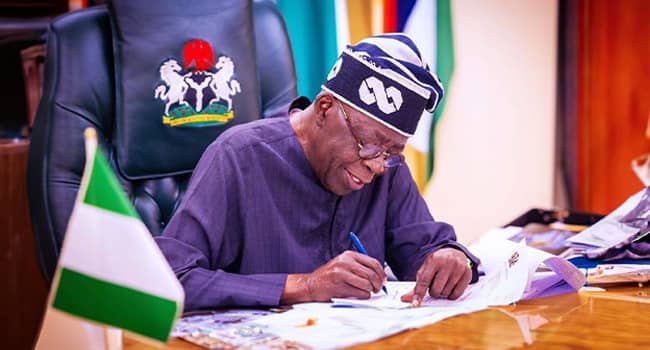
When President Bola Tinubu’s administration announced the approval of a staggering ₦4 trillion debt refinancing package for the power sector last week, it was framed as a bold effort to stabilize a struggling industry.
The debts owed to generation companies (GenCos) between 2015 and 2023 had long threatened the survival of operators and cast doubt on Nigeria’s electricity reforms.
Yet, beyond the official spin, lies a bigger, more controversial question: is this bailout truly about saving power for the people or about saving the pockets of vested interests who have long held the sector hostage?
For millions of Nigerians who endure endless blackouts while paying some of the highest tariffs in Africa, the government’s grand gesture looks less like a lifeline and more like déjà vu—a repeat of past bailouts, swallowed by inefficiency, corruption, and politics.
Since the privatization of the power sector in 2013, successive governments have poured trillions of naira into keeping operators afloat.
From the Central Bank’s ₦213 billion stabilization fund to multiple intervention loans, bailouts have become the rule rather than the exception.
Yet Nigeria still struggles to generate and distribute barely 4,500 megawatts of electricity— less than South Africa’s daily average, despite having nearly four times the population.
The new ₦4 trillion plan is designed to clear “legacy debts” owed to GenCos, who claim the shortfall has crippled their ability to pay gas suppliers and service loans.
But insiders whisper that much of the money will flow back to commercial banks heavily exposed to power firms, and to political elites with shadow stakes in distribution companies (DisCos).
“This is not about Nigerians enjoying more power,” one industry analyst told Sunday Independent, “It is about settling powerful financial and political interests who have been circling around this sector since privatization.”
POLITICS OF POWER
Electricity in Nigeria has always been as much about politics as it is about engineering.
The Tinubu administration, eager to prove that its economic reforms are working, has staked political capital on energy stability.
Yet it is squeezed between international lenders like the World Bank—who demand cost-reflective tariffs—and angry citizens already reeling from fuel subsidy removal and inflation.
Tariffs were recently hiked again, deepening public outrage.
Labour unions have threatened protests, accusing government of “forcing Nigerians to pay for darkness.”
Meanwhile, state governors are quietly lobbying for more control over electricity following recent constitutional amendments that grant states authority to generate and distribute power independently.
This tug-of-war—federal control, international pressure, and subnational ambitions—makes the sector a political battlefield.
The ₦4 trillion bailout, critics argue, is less a reform than a pacification strategy: buy time, keep GenCos quiet, calm banks, and hope Nigerians tolerate blackouts a little longer.
If the package goes through as planned, the winners are clear. GenCos get paid, easing their liquidity crisis. Banks recover loans that might otherwise turn toxic. Politicians with investments in the sector—often through proxies—reap silent dividends.
The losers are also clear: ordinary Nigerians. For they must still endure epileptic supply while paying higher tariffs, and seeing little relief ahead.
The losers bracket is quite wide. Small businesses, artisans, and manufacturers will continue to burn diesel to survive. For them, the question is simple: if trillions have been spent before with no visible improvement, how could it be different this time?
“This is not a rescue for Nigerians, it is a rescue for cronies,” fumed a consumer rights advocate in Abuja. “They call it a power sector bailout; I call it an elite sector bailout.”
THE DEBT TRAP
Experts warn that the bailout risks becoming another case of debt recycling.
Nigeria’s power market is structured on flawed assumptions: DisCos cannot collect enough revenue due to widespread energy theft, poor metering, and consumer resistance to high tariffs. GenCos, in turn, cannot pay gas suppliers or service loans. The government, fearful of collapse, steps in with bailouts.
“It is a vicious cycle,” explains Professor Adeola Adeniran, an Energy Economist.
“As long as you don’t fix structural issues—like transmission bottlenecks, poor metering, and non-cost-reflective tariffs— throwing trillions at the problem will not end the crisis. It only postpones it,” he said.
FEDERAL VS STATE: A BREWING BATTLE
The bailout also comes at a time when the electricity landscape is shifting.
The 2023 constitutional amendment devolved power to states, allowing them to generate and distribute electricity independently.
Lagos, Edo, and Ekiti have already taken steps to establish state utilities.
This has sparked a silent turf war: will federal bailouts to GenCos strengthen Abuja’s grip, or embolden states to demand their share of funds?
The ₦4 trillion package may inflame this competition, especially if states perceive it as another “Abuja-centred” gesture that leaves them carrying the burden of local blackouts without adequate support.
PROFITEERS IN THE SHADOW
Perhaps the most controversial aspect of Nigeria’s power crisis is the web of profiteers who thrive in darkness.
Diesel importers benefit from weak electricity supply. Politicians with vested interests in DisCos quietly resist reforms that would dilute their stakes. Even some unions resist full metering, fearing job losses.
“Every time you think about fixing power, you must ask: who benefits from keeping Nigerians in the dark?” A senior industry insider remarked. “The truth is, darkness is profitable for some.”
The ₦4 trillion refinancing, critics argue, risks becoming another pot of gold for these entrenched interests—paid for by taxpayers who may never see the light.
CAN ₦4 TRILLION TRULY FIX POWER?
Despite government’s assurances, doubts remain. Nigeria’s installed generation capacity is about 13,000MW but only 4.500MW gets to consumers due to transmission and distribution bottlenecks.
Without massive investment in infrastructure, technology, and governance, even a debt-free power sector may remain dysfunctional.
“This bailout buys political breathing space,” says Dr. Ifeanyi Nwosu, an energy consultant. “But it does not buy light for Nigerians.”
The ₦4 trillion refinancing package will dominate headlines for weeks, but the real story is not about numbers. It is about power in both senses of the word—electricity and politics.
For ordinary Nigerians, the measure of success will not be bond issuances or cleared debts. It will be whether their bulbs stay on, their fridges work, and their businesses can survive without burning diesel all night.
Analysts are agreed on this: until corruption, inefficiency, and vested interests are confronted head-on, Nigeria’s power sector will remain a stage for profiteers rather than a pillar of national development.
And ₦4 trillion more may only fuel the darkness, not end it.
COURTESY: Independent
