

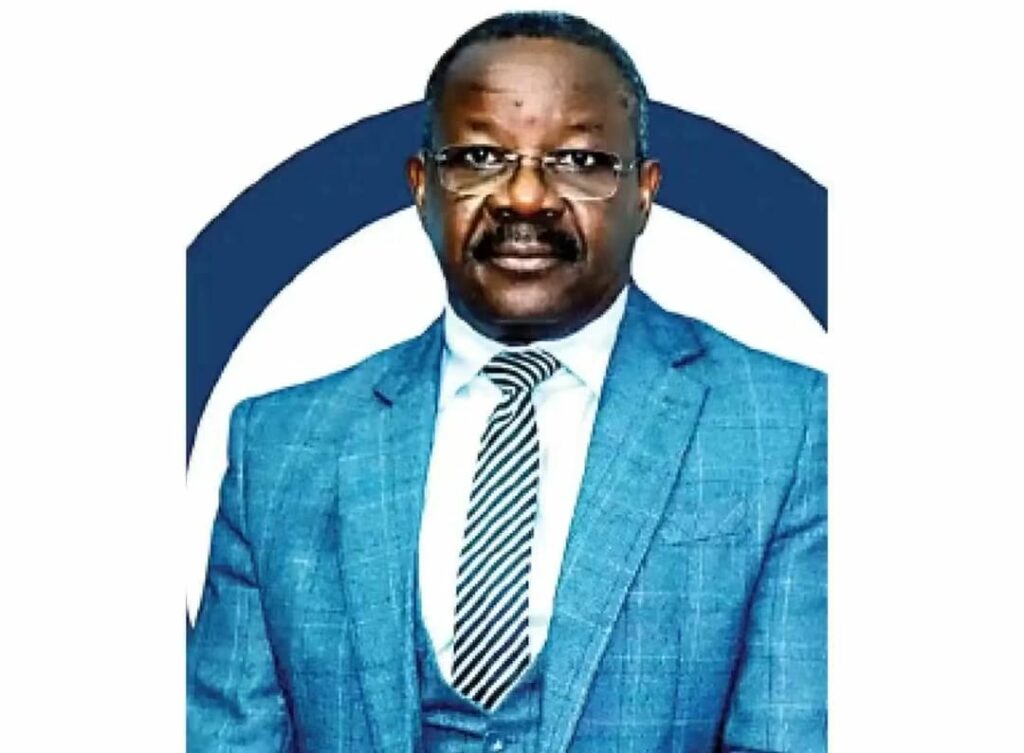
Retired Naval Commodore and Professor of International Relations, Diplomacy and Strategic Studies, Kunle Olawunmi, has warned that the Yoruba people could face serious political consequences regardless of the outcome of the 2027 presidential election if President Bola Ahmed Tinubu’s administration does not address what he described as fundamental national and constitutional problems.
Olawunmi, a former Deputy Director of Defence Administration at Defence Headquarters, made the remarks in an interview while discussing Nigeria’s governance challenges, constitutional reform, Yoruba self-determination and the political implications of Tinubu’s administration.
He argued that Tinubu’s presidency could negatively affect the political standing of the Yoruba people, regardless of whether the President wins or loses the 2027 election.
“Whether he wins this election, and I want you to quote me, whether he wins or loses this election, it is a loss to the Yorubas,” Olawunmi said.
According to him, the perceived failures of successive leaders from particular ethnic groups can create long-lasting consequences for how those groups are viewed politically.
He cited the continued political consequences of the 1966 coup and the treatment of the Igbo in Nigerian politics as an example of how historical events can influence perceptions of an entire ethnic group.
“I remember the so-called Igbo coup. Till today, the Igbos have been ostracised from governance of this country. Now, Tinubu is doing the same thing. That is why I say whether he wins or loses, we are done for,” he said.
Olawunmi argued that if Tinubu serves until 2031 without fundamentally changing Nigeria’s political structure, the Yoruba people could face significant difficulties in regaining the presidency for many years.
He claimed that the South-West could become increasingly politically marginalised under a future administration dominated by another northern political bloc.
“Yorubas can never have mouth to speak anywhere again,” he said, warning that the political damage could last for decades.
The retired military officer went further to advocate self-determination for the Yoruba people, arguing that conventional constitutional reform may not be sufficient to address the problems confronting Nigeria.
According to him, the only major intervention he believes could fundamentally alter the situation would be the emergence of a separate Yoruba nation.
“The only thing he can do for us as Yoruba now is to facilitate for us to have our self-determination,” Olawunmi said.
He criticised the current political system, arguing that attempts at constitutional reform have repeatedly failed to produce lasting changes.
Olawunmi referenced the 2014 National Conference and the Oronsaye Report, arguing that successive administrations had failed to fully implement recommendations that could have contributed to restructuring and improving governance.
He also accused the Tinubu administration of prioritising political survival over broader national reforms, while alleging that the President had failed to meet expectations among some Yoruba people who initially believed his administration would bring significant change.
Olawunmi stressed, however, that his criticism of Tinubu was not based simply on ethnicity.
He said Nigerians should not defend poor governance merely because a political leader belongs to their ethnic group.
“If you start behaving in a way that jeopardises the interest of the people that voted you in, I don’t care whether you are my brother, I will talk to you,” he said.
The professor also expressed frustration over insecurity, poverty, corruption and the wider economic difficulties facing Nigerians.
Asked what could fundamentally reset the country, he advocated what he described as a “genuine revolution,” arguing that conventional political processes had failed to address the country’s deep-rooted problems.
He said such a revolution should emerge spontaneously from widespread public dissatisfaction rather than being organised or sponsored by politicians.
Olawunmi’s comments come as political activity and debate intensify ahead of the 2027 general elections, with questions over Nigeria’s political restructuring, regional representation, constitutional reform and the future of the country’s major political blocs increasingly dominating public discourse.
His assertions about the political future of the Yoruba people, alleged foreign influence, and the consequences of the Tinubu administration represent his personal assessment and remain matters of political opinion rather than established facts.
