

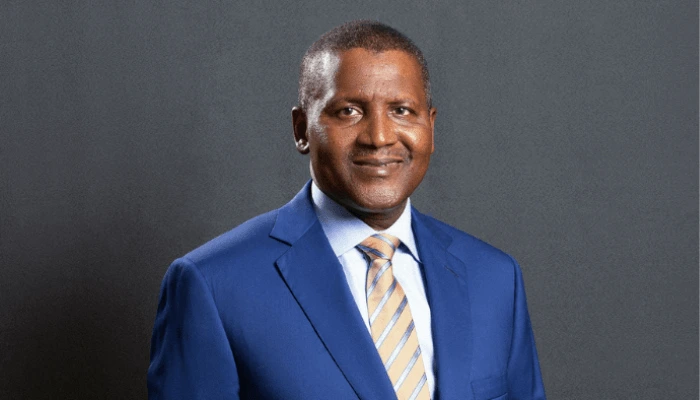
The Kano State Government has entered into a 20-year management agreement with Aliko Dangote to revive the Aliko Dangote Vocational Training Centre and restore it to its original role of equipping young people with practical skills for employment and self-reliance.
The agreement, formalised through a Memorandum of Understanding (MoU) signed in Kano, is aimed at addressing years of declining operations at the centre, which had limited its capacity to provide vocational training and support young people seeking alternatives to formal employment.
Umar Farouk Ibrahim, Secretary to the Kano State Government, disclosed the arrangement during the signing ceremony at the Office of the Secretary to the State Government.
Ibrahim said the decision to entrust the management of the facility to Dangote was driven by the need to ensure that the centre becomes functional again and delivers on the purpose for which it was established.
He stressed that the agreement did not amount to the transfer or sale of the centre to Dangote, explaining that ownership remains with the Kano State Government while the businessman and his representatives would manage the facility under the 20-year arrangement.
According to him, the arrangement is intended to provide the centre with the management structure, resources and operational capacity required to resume full-scale vocational training.
He said the government was particularly interested in ensuring that young people in Kano have access to practical and market-oriented skills that could enable them to secure employment, establish businesses and become economically self-reliant.
The development comes against the backdrop of growing concerns over youth unemployment and the need to expand vocational and technical education as a pathway to economic empowerment.
For Kano, a state with a large and youthful population and a long history of commercial and artisanal activities, functional vocational training institutions are seen as important in preparing young people for opportunities in trades and small-scale businesses.
However, the decline in the operations of the Aliko Dangote Vocational Training Centre had weakened its ability to fulfil that role, prompting the state government to seek a new management arrangement capable of restoring the facility and expanding its programmes.
Sunusi Abdulkadir, representative of Aliko Dangote, said the Dangote side appreciated the Kano State Government for approving the arrangement and was committed to restoring the centre to its intended purpose.
Abdulkadir said efforts would be made to revive the facility, provide the necessary equipment and introduce or strengthen vocational training programmes that would give young people practical skills relevant to the economy.
He said the focus would be on ensuring that the centre becomes a functional platform where young people can acquire skills capable of improving their economic prospects.
The Aliko Dangote Vocational Training Centre was established in Kano as a skills-development facility intended to equip young people with practical vocational knowledge and improve their capacity for self-employment.
The renewed management arrangement is therefore expected to shift the centre from a period of reduced activity towards a more sustainable model in which training, equipment and programme delivery can be strengthened.
The state government said the 20-year arrangement was designed to ensure continuity in the management and development of the facility, rather than leaving it vulnerable to recurring operational challenges.
The Attorney General and Commissioner for Justice, Umar Farouk Ibrahim as Secretary to the State Government, and Sunusi Abdulkadir representing Aliko Dangote signed the MoU formalising the management arrangement.
The government expressed the expectation that the partnership would ultimately produce a new generation of skilled young people who can participate more effectively in the state’s economy and reduce dependence on scarce formal employment opportunities.
Beyond the immediate revival of the centre, the agreement could also provide a model for public-private collaboration in vocational education, particularly at a time when governments are increasingly looking for ways to improve the quality and sustainability of skills-development institutions.
For Kano, the success of the arrangement will largely depend on the extent to which the centre is restored to full operation, equipped with modern facilities and able to provide training that responds to actual opportunities in the labour market and the wider economy.
The government said its central objective remained the restoration of the centre to its original purpose and ensuring that young people who pass through the facility leave with practical skills that can translate into jobs, businesses and sustainable livelihoods.
COURTESY: Businessday
