

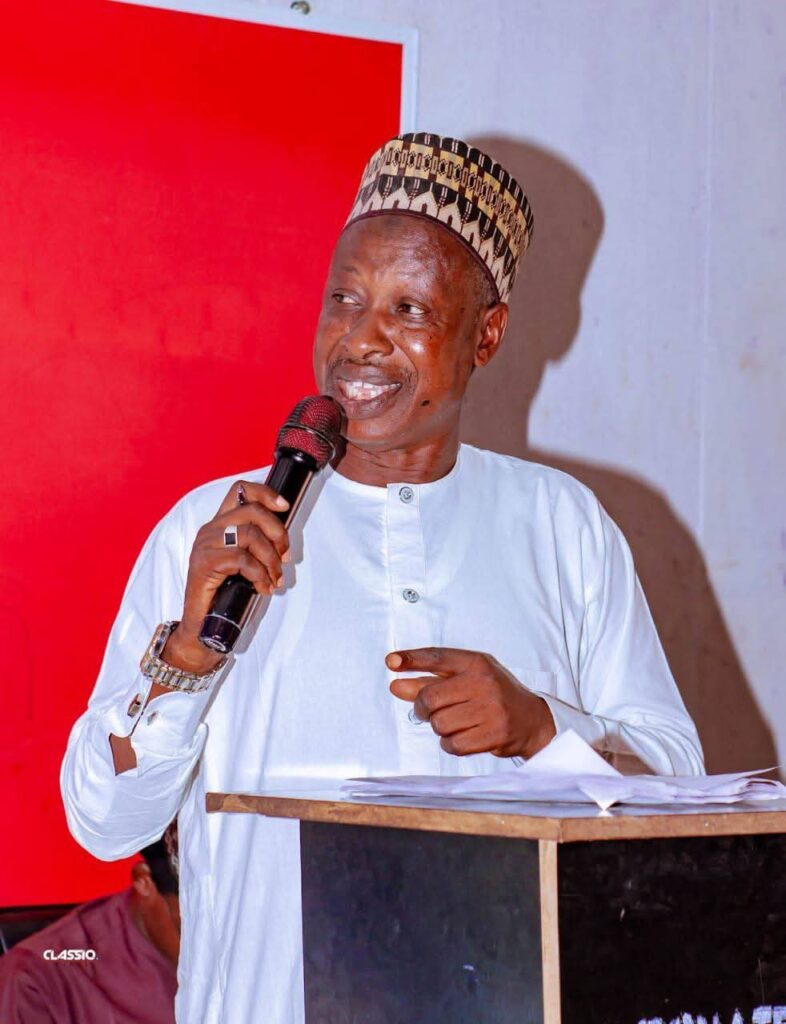
Being A Paper Presented at the Delegates Conference of the Sports Writers Association of Nigeria (SWAN), on 27th August, 2026 at the ZECOOL Hotel, Barnawa, Kaduna
By Sani Mohammed Zaria (SWAN President, 1996-2002)
Introduction
I consider it both a privilege and a responsibility to stand before this gathering of members of the Sports Writers Association of Nigeria at a time when Nigerian sports is crying out for direction, leadership and a new sense of purpose.
I have chosen a subject that is deliberately close to home—not because I intend to condemn the present generation of sports journalists, but because I believe that, as journalists, we must occasionally turn the searchlight upon ourselves.
The question before us is simple but profound:
What has happened to the Sports Writers Association of Nigeria as a force for change, a voice of conscience and an agenda setter in Nigerian sports?
Where is the SWAN that once made sports administrators sit up?
Where is the sports press that could influence appointments, challenge bad policies, expose incompetence and compel the establishment to take sports seriously?
Where is that fearless generation of sports writers whose opinions were respected because they were informed, principled and rooted in the ethics of journalism?
These are uncomfortable questions. But they are questions we must ask if we genuinely care about the future of Nigerian sports.
OUR GLORIOUS FOUNDATION
SWAN was not built merely as a social association of journalists who gather to cover sporting events.
It was built on a much bigger idea.
Our predecessors understood that the sports writer was more than a chronicler of results. He was an observer, watchdog, interpreter, critic, educator and advocate for the development of sport.
The sports press of those years understood that journalism had a responsibility beyond reporting who won and who lost.
We reported the game, but we also interrogated the system behind the game.
We questioned appointments.
We challenged policies.
We exposed administrative failures.
We celebrated excellence.
We demanded accountability.
And, importantly, we tried to do all of these within the boundaries of professional journalism.
That was the source of our strength.
The establishment feared the sports press—not because sports writers were powerful in themselves, but because they knew that a well-researched, courageous and professionally presented story could influence public opinion and force those in authority to respond.
SWAN had a voice. And that voice mattered.
FROM REPORTERS TO AGENDA SETTERS
There is a fundamental difference between reporting an agenda and setting an agenda.
A reporter waits for events to happen and tells the public what happened.
An agenda setter looks ahead, identifies what ought to happen, asks the difficult questions and forces society to discuss the issues that matter.
That is where I believe Nigerian sports journalism must return.
If our national teams are consistently underperforming, we should not wait until another tournament is lost before asking why.
If sports facilities are deteriorating, we should not merely report their collapse. We should investigate the policies, budgets and decisions responsible for that deterioration.
If the wrong people are appointed to manage our sporting institutions, we should ask questions about competence, experience, credibility and suitability before the consequences become disastrous.
If our athletes are poorly prepared, poorly rewarded or abandoned after achieving success, we should make it a continuing national conversation.
If sports development is receiving inadequate attention, the sports press must make that neglect impossible to ignore.
That is agenda setting.
WHAT HAS HAPPENED TO US?
We must have the courage to admit that something has changed.
The sports media environment has changed dramatically. Digital journalism, social media, blogs, instant news, citizen journalism and the race for clicks have transformed the profession.
But technology is not our problem.
The problem is what we have allowed technology to do to our professional values.
There was a time when a sports writer’s greatest possession was his credibility.
Today, credibility must not be sacrificed on the altar of access, material benefits, personal relationships or commercial considerations.
We must be careful not to paint everyone with the same brush. There are still many courageous, intelligent and uncompromising sports journalists doing excellent work.
But we must also acknowledge the uncomfortable reality that sections of the profession have become too close to the establishment they are supposed to scrutinise.
Where journalists become dependent on favours, appointments, sponsorships, allowances or other material considerations, the independence of the press becomes vulnerable.
And once the press loses its independence, society loses one of its most important mechanisms for accountability.
THE DANGER OF THE HIGHEST BIDDER
One of the most dangerous developments in sports journalism is the perception that the journalist can be won over by whoever provides the most attractive incentive.
We must resist this culture.
The sports writer must never become a commodity.
Our loyalty should be to truth, professional ethics, public interest and the development of Nigerian sports.
There is nothing wrong with journalists earning a decent living. There is nothing wrong with legitimate commercial relationships. There is nothing wrong with seeking sponsorship for professional programmes.
The danger begins when material consideration determines what we write, what we refuse to write, whom we protect and whom we attack.
When that happens, journalism becomes public relations disguised as journalism.
And SWAN must be bigger than that.
THE QUESTION OF APPOINTMENTS
Let me raise one issue that deserves our collective attention: appointments in Nigerian sports.
We have watched, on several occasions, important sporting positions go to people whose competence, experience or commitment to sports development may be questionable.
The consequences are enormous.
When the wrong people occupy strategic positions, athletes suffer.
Federations suffer.
Coaches suffer.
Sports development suffers.
Ultimately, Nigeria suffers.
The question therefore is:
What should SWAN do when important sporting appointments are made without sufficient regard for competence?
Should we remain silent?
Should we wait until failure becomes obvious?
Should we simply report the appointment and move on to the next story?
I believe the answer is no.
SWAN should develop the intellectual capacity to interrogate sporting appointments professionally.
We should ask:
- What qualifications does the appointee possess?
- What is his or her record in sports administration?
- What vision does the person have?
- What measurable objectives should the person achieve?
- What mechanisms exist to hold the person accountable?
- What does the appointment mean for athletes and the development of the particular sport?
This is not politics.
This is journalism.
WE MUST DEVELOP OURSELVES
But we cannot demand excellence from sports administrators if we ourselves are not pursuing excellence.
The new SWAN must be a learning SWAN.
We need continuous professional development.
We need workshops on investigative sports journalism.
We need training in data journalism.
We need to understand sports economics, sports governance, sports law, athlete welfare, sports science, talent identification, sponsorship and marketing.
We must learn how to analyse budgets and interrogate sporting policies.
We must understand the international standards against which Nigerian sports should be measured.
The sports journalist of today cannot afford to be merely a specialist in football results.
We must become specialists in sports development.
A journalist who understands the economics of sport can ask better questions.
A journalist who understands sports governance can identify bad administration.
A journalist who understands talent development can expose the gaps between rhetoric and reality.
A journalist who understands data can challenge statistics and claims with facts.
Knowledge gives journalism authority.
SWAN AS A THINK TANK
I believe SWAN should consider transforming itself from merely an association of practitioners into a think tank for Nigerian sports development.
Why should SWAN not periodically publish a “State of Nigerian Sports” report?
Why should we not produce policy papers on football, athletics, basketball, boxing, grassroots sports, sports infrastructure and athlete welfare?
Why should SWAN not organise an annual forum where sports administrators are invited to defend their records?
Why should we not create a professional platform where athletes, coaches, administrators, academics and journalists can discuss the future of Nigerian sports?
We have the human resources.
We have experienced journalists.
We have former administrators among our members.
We have access to athletes and coaches.
We have the institutional memory.
What we need is organisation, intellectual courage and collective purpose.
FROM CRITICS TO PARTNERS IN DEVELOPMENT
Being critical does not mean being destructive.
The best journalism does not merely identify problems. It helps society understand the problems and, where appropriate, points towards solutions.
SWAN should therefore aspire to become a constructive critic and strategic partner in sports development.
We should be prepared to praise good administrators.
We should defend institutions when they are unfairly attacked.
We should celebrate athletes who bring honour to Nigeria.
We should promote grassroots development.
But when there is incompetence, corruption, negligence or poor policy, we must not be intimidated into silence.
Our friendship with the establishment must never become a barrier to our professional responsibility.
THE ETHICS QUESTION
Perhaps our greatest strength remains the simplest one:
professional ethics.
The journalist must verify before publishing.
We must distinguish between fact and rumour.
We must give people the opportunity to respond.
We must avoid sensationalism.
We must resist character assassination.
We must not allow personal interests to determine our professional judgement.
In the era of social media, the pressure to publish first has become enormous.
But journalism is not a race to be first.
It is a responsibility to be right.
The credibility of SWAN will depend greatly on the credibility of its individual members.
WE MUST REDEFINE THE SPORTS WRITER
The sports writer of the future must be many things at once:
A reporter.
An investigator.
An analyst.
An educator.
A watchdog.
A historian.
A digital communicator.
And above all, a professional.
We must move from “Who won?” to “Why did they win?”
From “Who lost?” to “Why did they lose?”
From “Who was appointed?” to “Why was this person appointed and what should we expect from the appointment?”
From “Nigeria failed again” to “What systemic changes will prevent another failure?”
That is the difference between ordinary reporting and journalism that shapes society.
A NEW SWAN AGENDA
I therefore propose that SWAN, at national and state levels, considers a new agenda built around seven pillars:
- Professional Development
Establish regular training and capacity-building programmes for sports journalists.
- Sports Governance Watch
Create a professional platform for monitoring policies, appointments, budgets, facilities and administration in Nigerian sports.
- Investigative Sports Journalism
Encourage well-researched investigations into issues affecting athletes, federations, facilities and sports development.
- Policy Advocacy
SWAN should develop and present informed positions on major national sports policies.
- Athlete-Centred Journalism
Place the welfare, rights, development and dignity of athletes at the heart of sports reporting.
- Promotion of Grassroots Sports
Make grassroots development a permanent priority in our reporting agenda.
- Ethical Renewal
Develop and enforce stronger professional standards so that the credibility of the Association becomes its greatest asset.
WHAT ROLE SHOULD THE KADUNA CONFERENCE PLAY?
This conference must not end with speeches, elections, photographs and handshakes.
It should mark the beginning of a conversation about the future of SWAN.
Kaduna has historically been associated with strong institutions, intellectual engagement and sporting development.
There is therefore no better place to ask ourselves:
What kind of SWAN do we want to leave for the next generation?
Do we want to leave behind an association that merely organises elections and social gatherings?
Or do we want to leave behind an association that commands respect because it has become an indispensable voice in Nigerian sports?
The choice is ours.
THE ROLE ASSIGNED TO US BY HISTORY
Every generation inherits something from those before it.
Our predecessors gave us a foundation.
They gave us a name.
They gave us an association.
They gave us a profession.
They gave us examples of courage and professional commitment.
The responsibility of our generation is not to consume that inheritance.
It is to build upon it.
History will not ask how many conferences we attended.
It will not ask how many positions we occupied.
It will not ask how many allowances we received.
History will ask:
What did we do when Nigerian sports needed us?
Did we speak when silence was convenient?
Did we investigate when others looked away?
Did we challenge incompetence when it was unpopular?
Did we defend our athletes?
Did we demand accountability?
Did we help Nigeria discover and nurture the talents that could have made us a sporting superpower?
These are the questions that will ultimately define our generation.
CONCLUSION: THE TIME TO RECLAIM OUR VOICE IS NOW
Distinguished colleagues,
Nigeria has enormous sporting talent.
Our problem has never fundamentally been a shortage of talented athletes.
Our challenge has been the failure to consistently build the systems, institutions, leadership and environment required to convert talent into sustainable excellence.
And this is where SWAN has a historic responsibility.
We cannot change Nigerian sports from the newsroom alone.
But we can influence the national conversation.
We can expose failures.
We can celebrate excellence.
We can educate the public.
We can challenge policymakers.
We can hold administrators accountable.
We can promote good governance.
We can encourage investment.
And we can set the agenda.
But first, we must look at ourselves.
Let us recover the courage of the past.
Let us embrace the technology of the present.
Let us prepare for the challenges of the future.
Let us make professionalism our shield, knowledge our weapon and the development of Nigerian sports our collective mission.
Let us rebuild the confidence of the public in the sports press.
Let the administrator know that SWAN is watching.
Let the athlete know that SWAN is standing with him or her.
Let the government know that the sports press will constructively engage, but will not surrender its independence.
And let the next generation inherit an Association stronger, more respected and more influential than the one we inherited.
We must not merely report the game.
We must help change the game.
We must not merely follow the agenda.
We must set the agenda.
We must not merely chronicle the decline of Nigerian sports.
We must become part of the movement that restores Nigeria to the summit of sporting excellence.
That is the responsibility assigned to us by history.
That is the challenge before SWAN.
And that is the legacy we must now build.
Thank you.
