

…lExperts Urge Export Competitiveness, Domestic Productivity Enhancement
…Value Addition To Reduce Over-Reliance On Raw Commodity Export
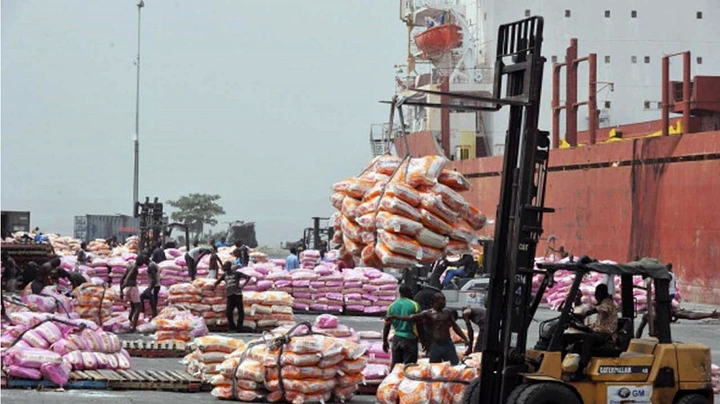
Nigeria’s agricultural sector recorded a historic surge in export earnings in the first quarter of 2025 due to the weakening of the naira.
Experts also said the surge in export earnings from cash crops is largely attributed to global demand, favourable commodity prices, and the depreciation of the naira, which made Nigerian exports cheaper and more attractive to international buyers.
Agricultural exports rose by an impressive 11 percent quarter-on-quarter (q/q) and 65 percent year-on-year (y/y) to reach N1.7 trillion, a record figure that now places agriculture’s share of total exports at 8.3 percent, up from 7.7 per cent in Q4 2024.
This export boom, driven largely by a weaker naira that boosted foreign demand and made Nigeria’s agro-products more competitive globally, continues a trend that began a year ago. It has also resulted in a significant agricultural trade surplus of N668.3 billion, as imports of agricultural goods dipped by 5% q/q to slightly above N1 trillion, though still higher by 13 per cent y/y.
But despite this trade triumph, the domestic reality tells a more sobering story.
Agricultural GDP growth in Q1 2025 was a meagre 0.1 percent y/y, a steep drop from the 2.5 per cent recorded in Q4 2024.
Experts say that beneath the impressive export numbers lie deep-rooted structural weaknesses — ranging from insecurity and poor infrastructure to policy inconsistency and market inefficiencies — that are stifling domestic production and sector-wide productivity.
Cocoa And Cashew Lead The Pack
A deeper look into recent NBS data reveals that Nigeria’s agricultural exports are still dominated by a narrow basket of commodities, primarily cocoa and cashew nuts. In Q1 2025: standard quality cocoa beans led the charts, contributing N719.9 billion, followed by superior quality cocoa beans, which earned N507.3 billion, and cashew nuts in shell, which added N157.6 billion.
These three items alone accounted for nearly 80 per cent of total agricultural export earnings in the quarter.
Cocoa prices in particular have been buoyant due to climate-related supply disruptions in other producing countries, creating a window of opportunity that Nigerian exporters have capitalised on.
Europe Remains Nigeria’s Top Agro Market
The geographical distribution of Nigeria’s agricultural exports reaffirms Europe’s dominance as the primary destination for locally produced agro commodities. The continent imported N1.1 trillion worth of Nigerian agricultural products in Q1, accounting for over 64% of total agro-export trade.
Asia followed with N431.1 billion in imports, showing growing demand from countries like India, Vietnam, and China for Nigerian cocoa and cashew.
On the import side, Europe was again the leading source, accounting to N406.8 billion of Nigeria’s agricultural imports, followed closely by America with N311.8 billion. Imported items largely include processed foods, wheat, dairy products, and other consumables that domestic producers are yet to meet in sufficient quantity or quality.
Significantly, the N668.3 billion trade surplus recorded in Q1 2025 marks, the fourth consecutive quarter of positive trade balance in agriculture — a welcome development for a country often plagued by trade deficits in other sectors.
Analysts say the surplus reinforces the latent potential of agriculture as a foreign exchange earner and a viable alternative to oil.
“This is exactly the direction Nigeria should be heading,” said Kemi Alade, an agricultural economist at Lagos Business School. “If we can sustain and broaden this export base while improving value addition, the sector can generate far more jobs, attract investment, and diversify the economy meaningfully.”
However, she warned that export growth should not mask the underlying weaknesses at home, especially in terms of productivity and food security.
GDP Rebasing As a Boost
The rebasing of Nigeria’s GDP using 2019 as the new base year has also affected how agriculture is viewed in the national economy.
According to NBS, agriculture now contributes 27.8 per cent to GDP, up from 24.64 percent under the previous methodology.
While the rebased data gives agriculture a more prominent role in the national economy, the weak growth rate of 0.1 percent y/y in Q1 2025 raises concerns about the real health of the sector.
Despite its massive footprint, the sector is barely expanding in terms of output — a situation economists describe as “growth in volume without growth in value.” Ibrahim Musa, an agribusiness consultant, said, “This growth stagnation is unacceptable. We can’t continue to record trade surpluses while local food prices rise and rural poverty deepens.”
Security, Infrastructure As Major Constraints
Stakeholders say the agricultural sector’s underperformance is tied to persistent security challenges, especially in Nigeria’s food-producing belts — the North Central, North East, and parts of the South. Armed banditry, farmer-herder conflicts, and insurgency continue to displace communities, disrupt planting seasons, and deter investment in commercial farming.
“There are entire communities in Benue and Zamfara that have not returned to their farms in over two years,” said Salisu Garba, Secretary of the All Farmers Association of Nigeria (AFAN).
He added, “How do you expect growth in a sector where farming is now a life-threatening activity?”
Findings by Daily Independent revealed that, aside security challenges, poor rural roads, insufficient irrigation, limited storage capacity, and erratic access to finance continue to constrain productivity and discourage mechanised farming.
The result is low yields, post-harvest losses, and a widening gap between potential and actual output.
Policy Direction: What Needs To Happen
To sustain export growth and ensure it translates into domestic development, experts are calling for a dual-track strategy: export competitiveness and domestic productivity enhancement.
Joseph Abina, a farmer and community leader, said, “First, the government must improve security in agricultural zones through coordinated military and civil interventions that guarantee safe access to farmland. Second, there is a need to invest massively in rural infrastructure — especially farm-to-market roads, cold chains, and irrigation systems — to drive efficiency”.
He added that, “the Central Bank of Nigeria (CBN) and the Bank of Agriculture (BoA) must also refocus credit facilities towards real farmers, rather than politically connected contractors, while ensuring that lending is tied to viable agribusiness models”.
Additionally, most analysts who spoke to Daily Independent agreed that value addition through agro-processing should be incentivised to capture more value locally and reduce the overreliance on raw commodity exports.
A Sector At A Crossroads
The Q1 2025 foreign trade report, according to the NBS, paints a complex picture of Nigeria’s agricultural sector: one that is shining on the outside but struggling within.
The record export earnings and positive trade balance offer a glimmer of hope — a sign that agriculture can indeed drive growth, create jobs, and earn forex. But for this potential to be realised, the country must fix the underlying issues dragging the sector down.
Without urgent reforms, Nigeria risks becoming a country that exports food to the world, yet struggles to feed its own people.
COURTESY: Independent
