
Minorities As Pawns In Nigeria’s Political Game: The Musa Removal and 2027 Power Realignment

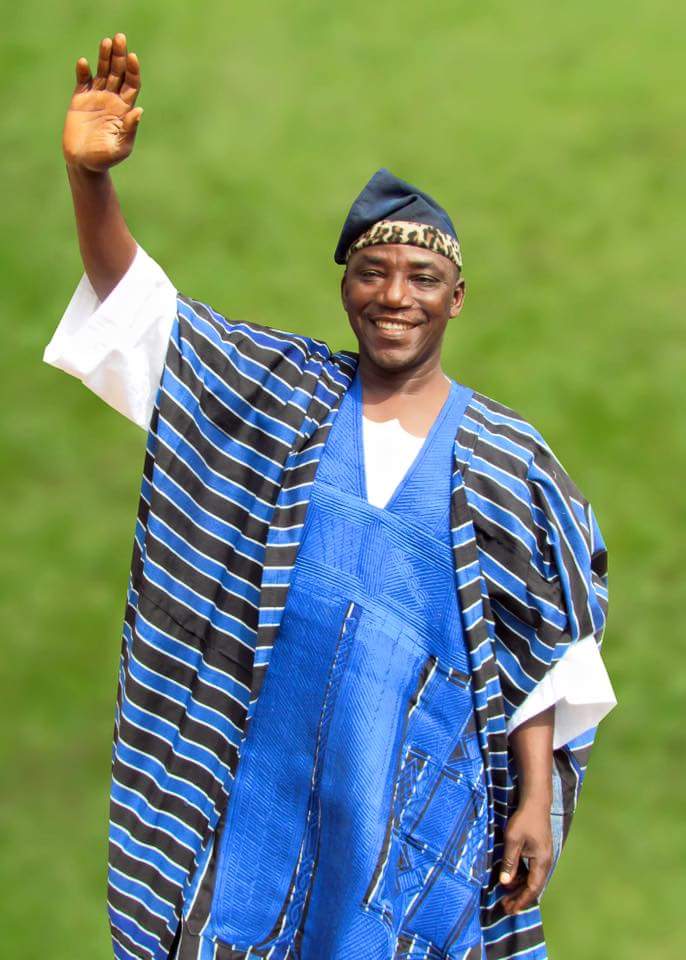
By Solomon Dalung
Nigeria’s political architecture has long been defined by exclusion and domination. The majority blocs Hausa, Fulani, Yoruba, and Igbo have maintained a firm grip on the levers of power, while the Middle Belt and South-South remain strategically useful but politically dispensable. Despite being pillars of national unity and economic sustenance, these minority regions continue to serve as pawns in a recurring game of convenience, deployed for legitimacy during elections and discarded once the spoils of power are shared. The recent removal of General Christopher Gwabin Musa as Chief of Defence Staff starkly exposes this enduring imbalance.
General Musa’s removal, despite his record of professionalism and discipline, shocked many observers. Appointed in 2023 as a symbol of inclusivity, he was widely praised for reforming military coordination and promoting inter-service synergy. Yet, barely two years later, he was replaced by a Yoruba general who had previously served under him. The official justification “strengthening national security architecture” rings hollow in a system where performance rarely trumps politics. For the Middle Belt, the message is clear: representation is temporary, and loyalty is no guarantee of continuity.
The contradiction deepens when juxtaposed with the case of the Inspector General of Police, Kayode Egbetokun, whose tenure was extended despite reaching retirement age. The contrast between Musa’s removal and Egbetokun’s retention highlights a selective application of institutional logic where rules are bent for some and rigidly enforced for others. To the minorities, this dual standard reflects a deeper problem: Nigeria’s governance structure remains hostage to sectional calculation, not merit or fairness. It reinforces the perception that appointments are not instruments of service but tokens of power rotation.
The plight of minorities in this context is both historical and systemic. The Middle Belt, often described as Nigeria’s “bridge of unity,” has suffered decades of fragmentation through ethnic and religious manipulation. Meanwhile, the South-South the source of Nigeria’s oil wealth endures ecological devastation and underdevelopment despite sustaining the federation’s economy. Both regions have produced patriotic leaders, soldiers, and reformers, yet they remain politically marginalized. Each cycle of “inclusion” ends with betrayal, feeding disillusionment and weakening national cohesion.
As Nigeria approaches the 2027 elections, a new power realignment is underway. The ruling elite from the dominant blocs are recalibrating alliances to retain control, while minorities are again being courted as electoral ornaments. Unless the Middle Belt and South-South act with strategic foresight, they risk being used to legitimize another round of exclusion. Their combined votes are decisive, yet their collective voice remains muted. The removal of General Musa must, therefore, be interpreted not only as a personnel change but as a warning of the political vulnerability of minority representation.
To escape this cycle, minority regions must adopt a new political strategy anchored on unity, negotiation, and structural reform. First, the Middle Belt and South-South should forge a political alliance that transcends ethnic or partisan boundaries. Together, they control critical votes, natural resources, and human capital capable of reshaping the power balance. Second, their politics must shift from personality-driven loyalty to issue-based bargaining, demanding constitutional guarantees for inclusion, tenure protection for key offices, and fiscal federalism that empowers local development. Third, they must mobilize civil society, youth, and religious groups to create a common narrative of justice and equity.
In conclusion, the replacement of General C.G. Musa and the extension of Egbetokun’s tenure encapsulate Nigeria’s recurring betrayal of its minorities. The coming 2027 realignment presents both a danger and an opportunity. If the Middle Belt and South-South remain divided and reactive, they will once again be pawns. But if they unite around a shared vision of justice, merit, and equality, they can transform Nigeria’s political landscape from a game of exclusion to a partnership of progress. The time has come for Nigeria’s minorities to stop being used and start negotiating power on their own terms.
Solomon Dalung LLB,LLM, BL
Igbarman Otarok & Garkuwan Arewa
Igbarman@gmail.com

Is General Musa representing the Middle Belt, or the minority tribes ?
He is a professional in that field, and besides, he’s fresh and conversant with the terrain. So I think this reason has overshadowed any other consideration.