
By Patrick Titus, Uyo
Akwa Ibom State has recorded a milestone with the drop in HIV/AIDS prevalence of 4.8 per cent in 2018 to 4.3 per cent in 2024 reports, representing five per cent decrease after six years of consistent fight to control the spread of the infection in the state.
It would be recalled that in the 2018 Nigeria HIV/AIDS Indicator and Impact Survey, Akwa Ibom had 4.8 prevalence of HIV/AIDS, making the state among the highest affected states in the country.
However, recent survey from the Nigeria State-Level Antiretroviral Therapy (ART) Impact Survey in the state (AISAKS 2024) conducted from August to October showed a downward prevalence of 4.3 per cent against 4.8 per cent.
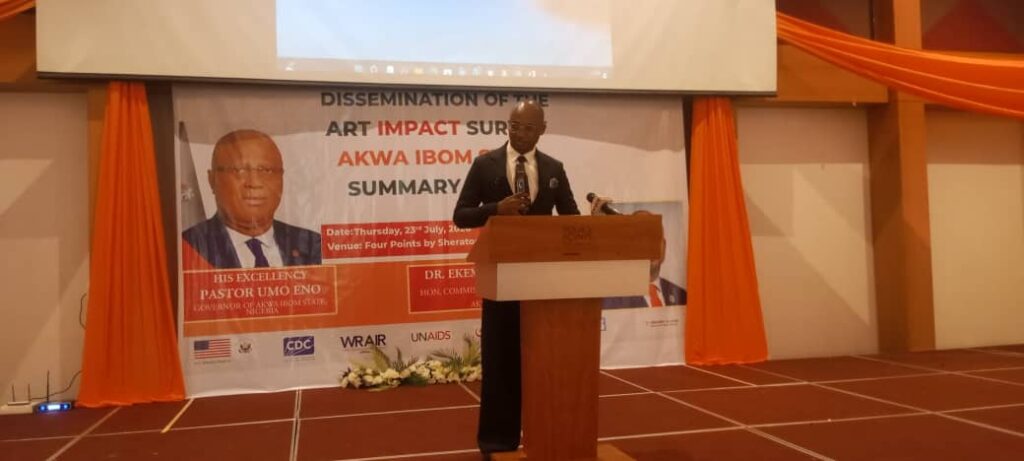
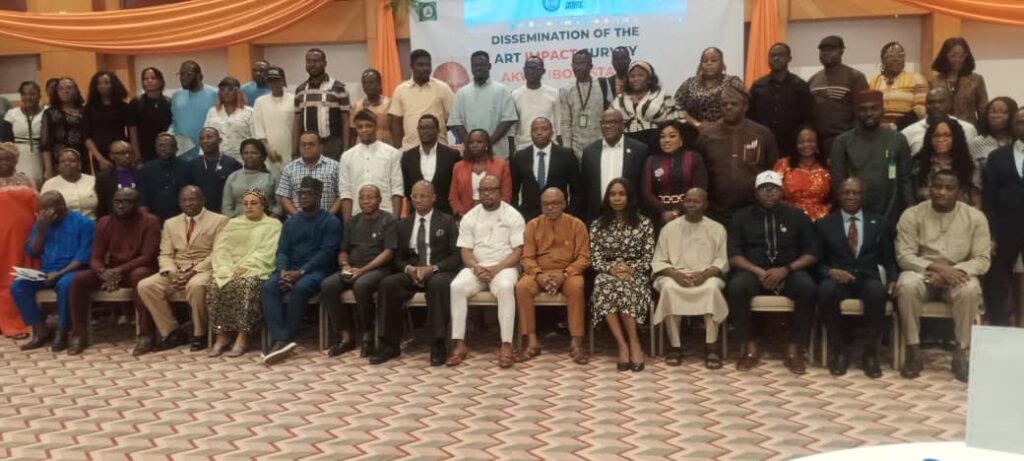
The development was disclosed in the state during a public presentation of the Nigeria State-Level AISAKS 2024 Summary Sheet at Four-Points by Sheraton in Ikot Ekpene, recently.
Dr. Ubong Okon, AIS Lead Strategist in the Public Health Initiatives and Patient HIV Information System3 (APIN/PHIS3), said the summary was a household-based survey conducted from October 2024 to assess the impact of the Akwa Ibom State HIV response.
Okon explained that in carrying out the survey, the team sampled adults from age 14 – 64, provided HIV counseling and testing with results returned, and collected information on the uptake of HIV prevention, care and treatment services.
According to him, the survey was led by the Federal Ministry of Health and Social Welfare, through the National AIDS, Viral Hepatitis and STIs Control Programme in collaboration with the National Agency for the Control of AIDS, Nigeria Centre For Disease Control and Prevention, and Akwa Ibom State Ministry of Health.
Analyzing the work done, Dr. Okon said, “the AISAKS 2024 had a design similar to the Nigeria HIV/AIDS Indicator and Impact Survey in 2018. The primary objective of AISAKS 2024 was to estimate ART coverage among people living with HIV in Akwa Ibom State.
“It also estimates state -level HIV prevalence among adults as well as the prevalence of viral load suppression (VLS), defined as HIV RDS less than 1,000 copies per mL among adults living with HIV.” he said.
Receiving the report on behalf of the Akwa Ibom state government, Commissioner for Health, Dr. Ekem John, said that the survey would provide critical information on progress made the state towards HIV disease control in the state including progress towards the global 95-95-95 targets.
John pointed out some gaps in survey, which he noted would necessitate more action from stakeholders against HIV to reduce new infections in the state.
“Therefore, it’s a call on everyone to come out of shell to be tested, treated and be monitored for viral load suppression, everybody has a role to play to scale up case finding with speed,” he added.
According to him, without massive programming for the first global 95 target, which is HIV testing, every part of the ’95-95-95 would be a failure, and that it was not enough for the United States Government to identify the problems from survey but a call on them, including partners to provide more support for massive testing and treatment.
The Commissioner said that the state Governor, Pastor Umo Eno is committed to reforming the state’s health as demonstrated in the release of counterpart funds in all the thematic areas; malaria, HIV/AIDS, and family planning.
He appreciated the technical working committee, MDAs, implementing partners, community-based organisations, researchers, networks and traditional rulers for their roles in enhancing a successful survey in the state.
Earlier, the Project Manager for the Agency for the Control of HIV AIDS in the state, Dr. Enobong Akpan said that the Agency, in partnership with various stakeholders in the HIV/AIDS response and control, have made a lot of progress to mitigate the problem in the state, especially in the viral load suppression among people on treatment.
He also acknowledged the gaps that needed to be filled in the area of case findings, stressing that a lot more would be done in creating necessary awareness of the virus especially among the new generations born from year 2000, just as the message of HIV is not strong in recent times.
“This survey shows that more work is ahead of us, that is the essence of the summary, meaning to expand case findings, innovate in terms of strategies and ensure that no community structure is left behind,” Akpan stressed.
Goodwill messages were given by the US Government, Nigeria Centre for Disease Control and Prevention (NCDC), NMOD, National Action for the Control of AIDS (NACA) Network of People Living With HIV/AIDS (NEPWHAN) among others.
