Adeboye Hails Gov Diri, Deputy Gov, Dikko, Olopade, Others For Successful National Grassroots Sports Summit

By Andrew Abah, Abuja
The Senior Special Assistant to the President on Grassroots Sports Development and Chairman of the Main Organising Committee of the just concluded National Grassroots Sports Summit, Hon. Adeyinka Anthony Adeboye, has expressed profound appreciation to prominent Nigerians, traditional rulers, government officials and sports stakeholders whose participation contributed to the successful of the Summit.
The two-day summit, held November 19–20 at the State House Banquet Hall, Presidential Villa, Abuja, brought together leaders from different sectors to discuss practical solutions for sustainable grassroots sports development.
Adeboye particularly thanked President Bola Ahmed Tinubu, GCFR, for endorsing the summit and delivering his opening address through the Secretary to the Government of the Federation, Senator George Akume, CON, who formally declared the summit open.
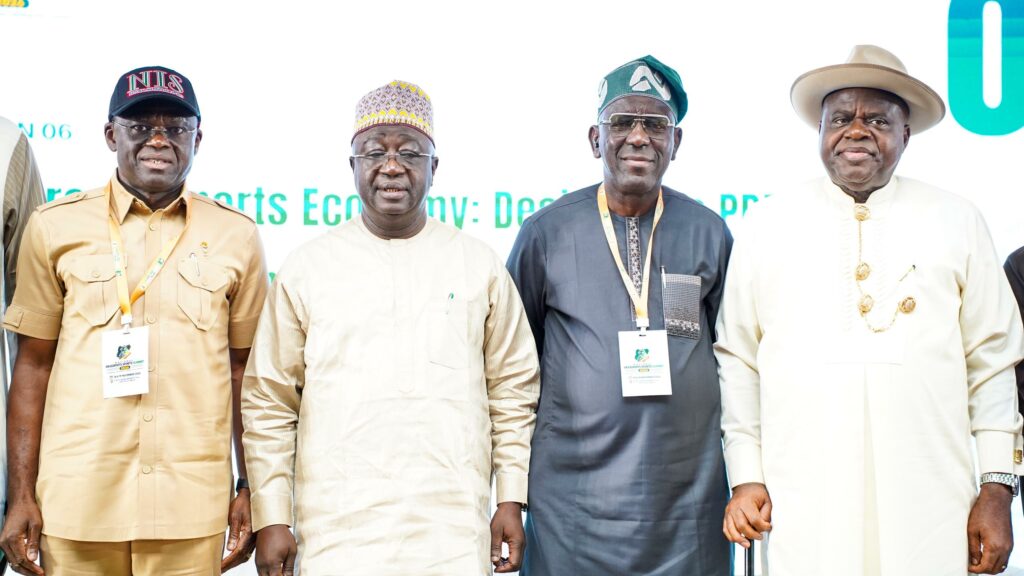
He commended the Executive Governor of Bayelsa State, Senator Douye Diri, for personally attending the summit, alongside the Deputy Governor of Kwara State, Mr. Kayode Alabi, and the Deputy Governor of Nasarawa State, Dr. Emmanuel Akabe.
The MOC Chairman reserved special appreciation for the Chairman of the National Sports Commission (NSC), Mallam Shehu Dikko, and the Director-General, Hon. Bukola Olopade, for their leadership, institutional support and commitment to repositioning Nigerian sports.
He equally acknowledged the Director-General of the National Institute for Sports (NIS), Comrade Philip Shaibu, for his contributions to sports development.
Adeboye also expressed gratitude to the revered traditional rulers and community leaders who honoured the summit with their presence and representation.
Among those recognised were His Royal Majesty, Oba Sulaiman Bamgbade, the Olofin of Isheri Olofin Kingdom; Oba Soaga Williams, the Oba of Alagbado; High Chief Sunday Olateju Afolabi, the Baale of Oro; and Chief Simon Kayode Olayemi Olayioye, the Asanlu of Oro.
He also acknowledged the traditional institutions of the Oba of Lagos, the Shehu of Borno and the Obi of Onitsha, alongside other Yoruba monarchs and traditional leaders who supported the gathering.
According to Adeboye, the involvement of traditional institutions demonstrated the importance of community leadership in discovering talents, encouraging youth participation and sustaining local sporting programmes.
The SSA further appreciated former Lagos State Governor and former Minister of Works and Housing, Mr. Babatunde Raji Fashola, SAN, for delivering a thought-provoking keynote address that challenged sports administrators to move beyond discussions and prioritise implementation.
He thanked the leadership and representatives of the National Assembly, including the Senate and House of Representatives, as well as the Defence Headquarters, Nigerian Army, Nigerian Navy, Nigerian Air Force, Nigeria Police Force and Federal Fire Service.
Special appreciation also went to the Nigerian Economic Summit Group (NESG), development partners, corporate organisations, sports federations, coaches, athletes and media practitioners for their contributions.
Adeboye described the gathering as a demonstration of the collective determination needed to create sustainable opportunities for young Nigerians.
He emphasised that the participation of political leaders, traditional rulers, security institutions and private-sector stakeholders must translate into stronger partnerships and practical grassroots sports programmes.
The MOC Chairman also thanked members of the Main Organising Committee and its various subcommittees for their dedication and sacrifices throughout the planning and successful execution of the summit.
He reaffirmed his commitment to working with all stakeholders to ensure that the summit’s recommendations produce measurable results across Nigeria’s 774 Local Government Areas.
Adeboye stressed that the true legacy of the summit would be determined by the opportunities created for young athletes, the facilities developed in communities and the lasting partnerships established to strengthen Nigerian sports.
