
Buhari Ordered Thousands of Tractors From Brazil, Parked in Sheda Near Gwagwalada – Galadima

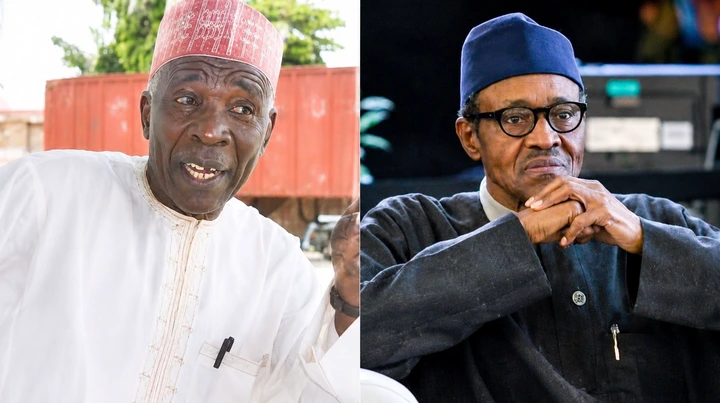
Questions about Nigeria’s commitment to revitalising its agricultural sector resurfaced on Thursday after Engineer Buba Galadima, a chieftain of the Nigeria Democratic Congress (NDC), alleged that thousands of tractors acquired during the administration of former President Muhammadu Buhari have remained idle instead of being distributed to farmers across the country.
Galadima made the claim while criticising what he described as the government’s failure to effectively implement policies capable of transforming agriculture into a major driver of economic growth.
According to him, the inability to properly utilise critical agricultural equipment has undermined efforts to increase food production, create employment opportunities, and strengthen the nation’s economy.
Speaking during an interview on Arise News on Thursday, July 16, 2026, the veteran politician said that despite several initiatives introduced over the years to support agriculture, many Nigerian farmers have yet to experience meaningful government assistance.
He acknowledged that he had been one of the strongest critics of former President Muhammadu Buhari but insisted that the decision to procure thousands of tractors for the agricultural sector was a commendable initiative that should have benefited farmers.
Galadima, who described himself as a practising farmer with firsthand knowledge of the sector’s challenges, argued that agriculture remains the largest employer of labour in Nigeria.
However, he said poor policy implementation, rising production costs, inadequate mechanisation, and weak government support have continued to discourage farmers and reduce productivity.
According to him, many farmers are battling the high cost of fertilisers, seeds, chemicals, and other farming inputs, while at the same time receiving low returns for their produce.
He warned that unless these challenges are addressed, farming will become increasingly unattractive to young people, thereby threatening the country’s long-term food security.
Highlighting what he described as one of the biggest examples of wasted investment in agriculture, Galadima alleged that thousands of tractors imported from Brazil during the Buhari administration are currently lying unused at the National Agricultural Seed Council facility in Sheda, near Gwagwalada in the Federal Capital Territory.
In his words, “Buhari, as bad as he is, and as fiercely as I fought him, ordered tractors, thousands of tractors, from Brazil. They are all now parked at the Seed Council in Sheda, after Gwagwalada. Anybody can go and see. They refused to distribute them to the farmers.”
He argued that making the tractors available to farmers would significantly improve agricultural productivity by enabling mechanised farming, increasing cultivated land, reducing labour costs, and boosting crop yields.
According to him, such a move would not only improve food production but also generate employment opportunities across the agricultural value chain.
Galadima further maintained that any government genuinely committed to economic development must prioritise investment in local agriculture instead of depending heavily on food imports.
He stressed that empowering farmers with modern equipment, affordable financing, improved seedlings, and access to markets would go a long way toward reducing inflation, improving rural livelihoods, and strengthening the country’s economy.
He also noted that a vibrant agricultural sector has the capacity to stimulate industrial development by supplying raw materials to local manufacturers while reducing Nigeria’s dependence on imported goods.
According to him, no country can achieve sustainable economic growth or genuine independence without first guaranteeing food security for its citizens.
The NDC chieftain concluded by saying that if his party emerges victorious in the 2027 general elections, one of its immediate priorities would be to ensure that the allegedly idle tractors are distributed to farmers across the country.
He argued that public investments should directly benefit those they were intended for, adding that putting the equipment into use would help improve agricultural productivity, create jobs, and contribute meaningfully to Nigeria’s overall development.
COURTESY: Yamude
