Workers, masses facing worst survival crisis in Nigeria’s history — NLC
…Says citizens being crushed by inflation, insecurity, poor wages
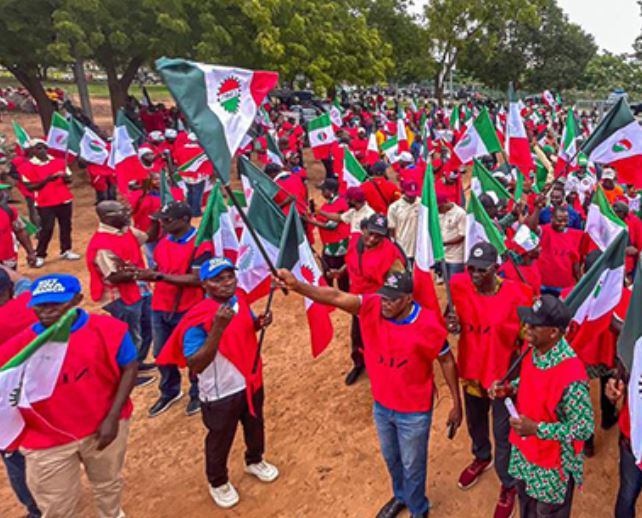
The Nigeria Labour Congress, NLC, has warned that Nigerian workers and the masses are facing the worst survival crisis in the nation’s history, driven by rising inflation, deepening insecurity, poor wages and the collapse of social protection systems.
NLC yesterday, said the present hardship is more severe than what Nigerians experienced during the civil war or the era of austerity measures, stressing that financial insecurity has become the defining reality of working people across the country.
In a statement by its President, Joe Ajaero, titled FINANCIAL INSECURITY: A SCOURGE IN THE LIVES OF NIGERIAN WORKERS’ NLC said “Nigerians, especially Nigerian workers, are currently confronted with the worst survival crisis in the history of our nation—worse than the civil war years and even the era of austerity measures. At the heart of this crisis lies the growing scourge of financial insecurity.
“Today, the Nigerian worker sits at the bottom of the ladder when compared with workers in many African countries, including war-ravaged nations such as Somalia and Sudan.
“The simple and natural progression of life is that a person must eat to survive. However, when work no longer provides adequate income to meet basic needs, survival becomes extremely difficult. When daily existence turns into a constant struggle, workers become deeply insecure, exposed to overwhelming existential demands that can only be addressed financially.
“This is now the lived reality of Nigerian workers and the masses. Workers are heavily stressed, constantly on edge, and left with little or no hope for savings, asset accumulation, or long-term security.
“At a time when lives have become increasingly insecure due to widespread violence across the country—including Boko Haram and ISWAP terrorism, banditry, and kidnapping—it is important to draw attention to the parallel and worsening crisis of financial insecurity. This crisis is both a direct consequence of physical insecurity and an independent, mutually reinforcing factor.
“The truth is that the incomes of Nigerian workers have continued to decline, even as they work harder. Nigeria’s inflation rate—over 30 per cent in 2024—remains among the highest globally, severely eroding purchasing power, despite questionable claims of declining inflation figures by the National Bureau of Statistics (NBS).
“Real wages have stagnated and, in many cases, collapsed. Salaries—particularly in the public sector and in many private organisations—have failed to keep pace with inflation. The national minimum wage of ₦70,000 is grossly inadequate to meet basic needs. That the price of a bag of rice exceeds the national minimum wage should prick the conscience of any responsible leader.
“Currency depreciation has further worsened the situation. The naira’s significant loss of value against major currencies has increased the cost of imported goods, fuel and services, directly driving up the cost of living for workers.
“Rising fuel prices have triggered sharp increases in transportation costs and production expenses, which in turn affect the prices of all goods and services. Food inflation has made proper nutrition largely inaccessible to the average worker, with food expenses consuming as much as 80 per cent of monthly income in many households.
“Unemployment and underemployment have created a large pool of desperate job seekers, placing downward pressure on wages and fueling the growth of informal, low-paying and insecure jobs.
“Workers are also confronted with weak social safety nets. Unemployment benefits, health insurance and pension coverage remain inadequate or non-existent for many, especially those in the informal economy. Even within the formal sector, contributory pension schemes often deliver insufficient benefits due to low contributions and economic volatility, undermining the future value of current savings.
“The high cost of housing and transportation remains another severe burden. Urban rents and transport fares are disproportionately high relative to incomes, forcing many workers into long, expensive commutes. Some workers now remain in their workplaces throughout the week, unable to afford daily transportation home.
“Multiple taxation and deductions further erode take-home pay. Workers face numerous statutory deductions—taxes, pension contributions, union dues—without commensurate improvements in public services. In addition, rising electricity and telecommunications tariffs, as well as tolls on public highways, have intensified the financial emasculation of Nigerian workers.
“Poor public infrastructure compels workers to self-fund basic services. Significant portions of income are spent on alternative power supply, water, security and private healthcare due to the failure of public systems.
“Widespread insecurity and displacement have created one of the gravest financial crises for Nigerian workers. In many regions, conflict and terrorism disrupt livelihoods, displace families and destroy assets—often leaving workers impoverished, when they are not killed in the process.
“Nigerian workers are trapped in a relentless squeeze between macroeconomic instability and systemic failure. Soaring inflation, a depreciating currency and stagnant wages have destroyed purchasing power, while the high costs of essentials—food, fuel, housing and transportation—consume most incomes.
“These challenges are compounded by job insecurity, weak social protection and the burden of privately funding basic services due to collapsing public infrastructure. The result is a vicious cycle of financial precarity in which saving or investing for the future becomes impossible and daily survival takes precedence.
“Without urgent and comprehensive interventions to stabilise the economy, raise real incomes and strengthen social protections, the financial insecurity confronting Nigerian workers will continue to undermine individual well-being and the nation’s broader economic prospects.
“It is in the interest of the Government—and indeed the nation—that decisive action is taken to address these threats facing Nigerian workers.”
COURTESY: Vanguard



Post Comment