The Manufactured Middle Belt: Untold History, Foreign Backing, And The Agenda To Fracture Northern Nigeria
By Safwan Umar Yahaya / Digital Journalist | Media Analyst | Researcher, Mangu L.G.A Plateau State Nigeria. E-mail safwanumaryahya@gmail.com
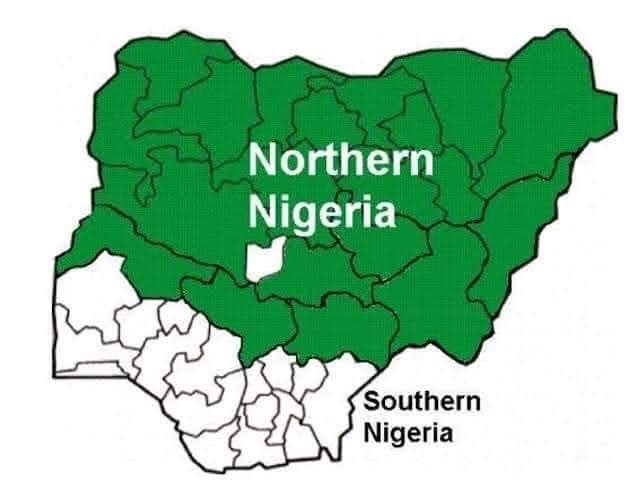
For decades, the phrase “Middle Belt” has been presented as if it were an ancient, natural, or culturally grounded identity. It is not. Everything when traced to verifiable historical documentation, colonial archives, missionary correspondence, political strategies of the 1950s–1960s, and recent NGO influence leads to one fact: the Middle Belt is a political project, not a historical region.
This investigation examines the origins, the promoters, and the motives behind the Middle Belt rhetoric. It also clarifies how Christian missionary blocs, certain NGOs, and post-independence political actors weaponized the term to build influence while projecting the North as monolithic, oppressive, or expansionist.
This report is not propaganda; it is an evidence-driven audit of history, identity politics, and power-building.
- THE HISTORICAL REALITY: “MIDDLE BELT” DID NOT EXIST BEFORE 1940s
Before colonial rule, the area now called “Middle Belt” was simply part of the Northern territories consisting of emirates, chiefdoms, independent communities, and federated systems. There was no distinct geopolitical, cultural, or political region called Middle Belt.
Evidence:
- Colonial Administrative Maps (1900–1959) All clearly recognize Northern Nigeria as one unified administrative region.
Northern Protectorate (1900–1914)
Northern Region (1914–1959)
No map shows “Middle Belt.”
- Lord Lugard’s Correspondence (1913–1915) Notes that the “North contains diverse peoples but functions under one administrative framework.”
- Federal Government Archives, Kaduna & Lagos, All constitutional conferences (1946, 1950, 1957, 1959) list three regions only: Northern, Western, Eastern.
No “Middle Belt proposal” was ever constitutionally adopted.
CONCLUSION: It is a 20th-century political creation, not an ethnic identity.
- THE ORIGIN OF THE MIDDLE BELT PROJECT: A POLITICAL FRONT, NOT AN INDIGENOUS CLAIM
The first organized use of the term Middle Belt came from:
United Middle Belt Congress (UMBC, 1955)
Led by Joseph Tarka, backed by:
Missionary blocs aligned with Northern Christian minorities.
Action Group (AG) led by Obafemi Awolowo, who needed allies to weaken the Northern People’s Congress (NPC).
Foreign missionary agencies who feared the spread of Islamic influence.
UMBC’s creation was a strategic response to NPC dominance, not a reflection of ancient political identity.
Archival references:
West African Review (1955–1959)
UN Colonial Reports (1954)
British Colonial Office dispatches supporting the formation of minority political blocs to counter “Northern Islamic political coherence.”
This was a project carefully nurtured to divide Northern votes and weaken the region’s bargaining power.
- THE MISSIONARY & FOREIGN NGO INFLUENCE
The Middle Belt rhetoric grew through:
Christian Missionary Society (CMS)
Sudan Interior Mission (SIM)
Roman Catholic Missions
Foreign-funded NGOs describing the North as “Islamic-dominated” and minorities as “subjugated”
PURPOSE:
Create a “buffer zone” between Muslim-majority North and Christian-majority South and amplify a narrative of religious oppression.
Research by:
Toyin Falola (University of Texas)
Abdul Raufu Mustapha (Oxford University)
John Paden (George Mason University)
shows clear evidence of this missionary framing.
- THE IDEOLOGICAL STRATEGY: MAKE THE NORTH LOOK LIKE AN OPPRESSOR
Once the concept gained momentum, promoters pushed several narratives:
- “The North is trying to dominate minorities.”
- “The Middle Belt is a separate nation.”
- “We were never part of the North.”
- “Our culture is different; we must break free.”
These claims became loud after:
The 1966 coups
The civil war alignments
Post-1999 restructuring debates
Yet none are backed by pre-colonial or colonial evidence.
- THE AGENDA IN 2020s: NEW MEDIA, NEW FUNDING, NEW ACTIVISTS
Today’s Middle Belt agitation is driven by:
Diaspora activists
Social media influencers
Western-funded NGOs focused on “minority rights”
Politically motivated groups seeking new state creation
Anti-Northern rhetoric disguised as activism
Their messaging strategy:
Use emotional narratives
Amplify Christian Muslim tension
Label the North as “feudal,” “Islamic extremist,” or “domineering”
Portray Middle Belt as a “liberation region”
This is psychological warfare, not cultural truth.
- THE REALITY: THE MIDDLE BELT IS PART OF THE NORTH—HISTORICALLY, GEOGRAPHICALLY, CULTURALLY
Language diversity exists across Nigeria not unique to Middle Belt.
Culture varies, but regional unity remains historical.
Most Middle Belt communities participated in Northern administrative, educational, and economic systems for over 120 years.
What the agenda seeks is:
Fragmentation
Division for political advantage
Weakening of the North’s demographic power
Ethno-religious polarization
This is why many of the loudest voices come from activists who have never studied the region’s real history.
- WHAT THE WORLD MUST UNDERSTAND
The Middle Belt is not a threat.
The North is not an oppressor.
The problem is manufactured narratives.
If Nigeria wants peace:
We must reject divisive identity creation
We must rely on historical facts
We must analyze who benefits from the division
As a researcher and media analyst, the evidence is consistent:
The Middle Belt agenda is a long-term political project with foreign encouragement, rooted in 1950s anti-Northern strategies not an indigenous identity.


Post Comment