SUNDAY CORNER: Who Sent General Musa Uba To His Death?
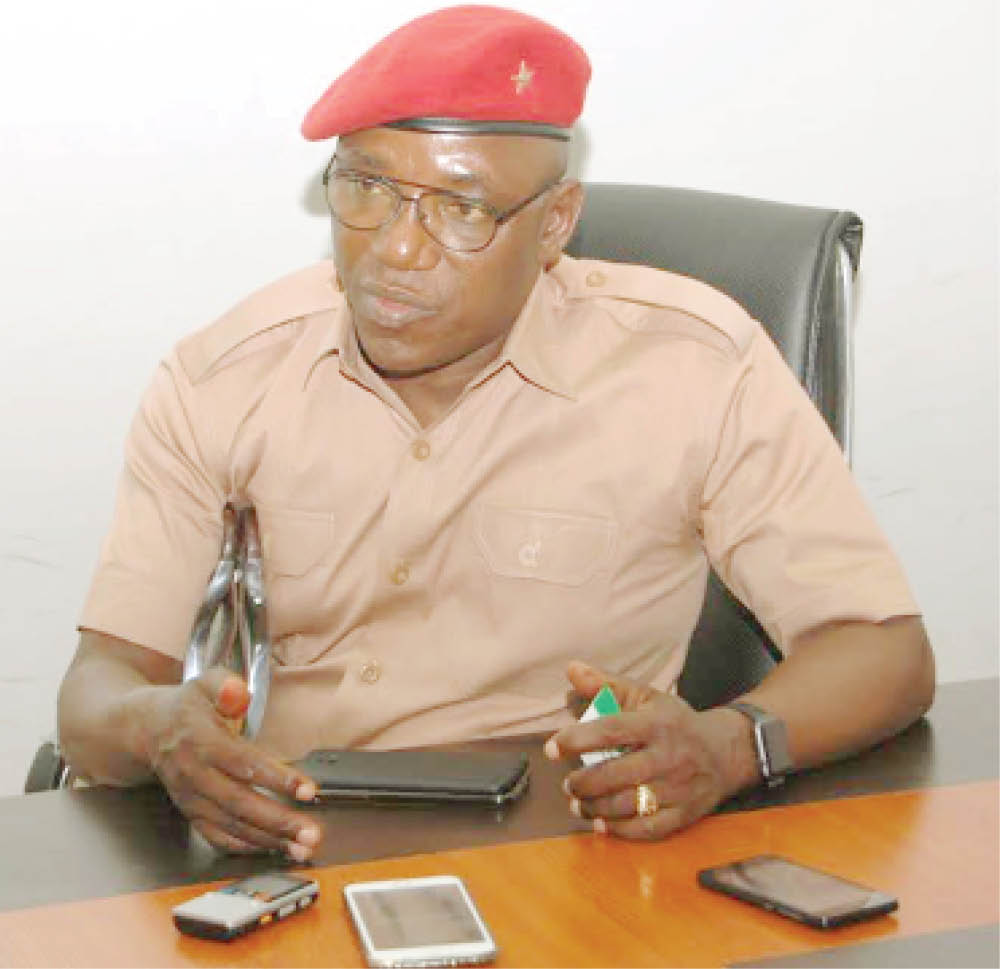
By Solomon Dalung
The death of Brigadier General M. Uba in Damboa is not an ordinary battlefield tragedy; it is a national scandal that raises far deeper questions than the official narrative dares to confront. In every professional military tradition, Generals are not thrown into frontline engagements. They are theatre commanders, strategic planners, and custodians of operational integrity. They do not venture into hostile zones without layered protection, real-time surveillance, secured intelligence, air cover, and a meticulously coordinated movement protocol. When an officer of this stature ends up captured and killed, the issue is not merely what ISWAP did, but what the system failed to do.
The uncomfortable truth is that such an incident does not happen without internal lapses. It is neither random nor accidental. Generals are shielded for a reason: they embody strategic continuity. For every layer of protection around a senior commander to collapse simultaneously suggests something far more sinister than “operational bad luck.” It suggests betrayal. It forces the question: who did General Uba offend, and who stood to benefit from his vulnerability? In the North-East, where corruption has metastasized into a parallel war economy, officers who insist on transparency, discipline, and accountability naturally make enemies.
A senior officer who disrupts entrenched racketeering networks, fuel diversion, ammunition theft, ghost-soldier payrolls, inflated logistics contracts, food supply cartels, and covert dealings between compromised local actors and insurgent groups, quickly becomes a threat to those profiting from the conflict. If General Uba resisted, questioned, or blocked any of these corrupt channels, he would have offended individuals whose interests thrive on insecurity. Such people do not forgive; they eliminate obstacles.
This brings us to the central question Nigeria must not ignore: why was a Brigadier General in such a dangerous zone with inadequate support? The anomalies are glaring. He moved without comprehensive surveillance, drove into a hotspot where ISWAP appeared to have advance notice, traveled without sufficient armoured protection, and operated without air reaction capability or a properly staggered backup convoy. This is not how Generals move. This is how Generals are exposed. When multiple safety systems fail in perfect sequence, it is rarely coincidence, it is coordination by those who choose not to act when action is needed.
Equally troubling is the matter of movement clearance. A General’s movement is never impulsive. Such travel requires formal clearance, intelligence briefings, surveillance assessment, and escort planning. Someone approved that movement. Someone briefed him. Someone managed the intel picture. Someone knew his route and timing. If any of these individuals were compromised or manipulated then the possibility of deliberate exposure becomes an unavoidable question. Was he set up? Was his route leaked? Was support intentionally withheld at the critical moment?
Insurgents do not ambush Generals by chance. They succeed only when insiders leak routes, delay backup, remove protections, supply false intelligence, or quietly step aside. These are not operational mistakes; they are deliberate decisions rooted in personal motives, motives linked to corruption, fear of reform, political interference, and the profits of a prolonged war. The real enemies are not only hidden in the forests of the North-East; some operate comfortably within the structures meant to safeguard the nation.
This is why General Uba’s death must not be buried under institutional silence. He deserved the highest protection the military could offer, yet was left fatally exposed. Nigeria owes him and itself, a transparent, independent, and uncompromising investigation. The country must confront the painful reality that it is fighting a dual war: one against terrorists, and another against insiders who feed, fund, protect, and enable them. Until this truth is addressed, more officers will die, not because insurgents are invincible, but because internal betrayal is rampant.
May General Uba’s death become the catalyst for accountability. May it spark the audit, introspection, and reforms the Nigerian military desperately needs. And may the nation finally acknowledge that while enemies in the forest are dangerous, the enemies within the fortress are far more deadly, because they alone possess the keys to open the gate. Happy Sunday.
Solomon Dalung LLM, LLB, LB
Igbarman Otarok & Garkuwan Arewa
Voices of the Silent Majority
igbarman@gmail.com


Post Comment