Rethinking Productivity: Beyond the Hustle
By Engr. Bello Gwarzo Abdullahi, FNSE
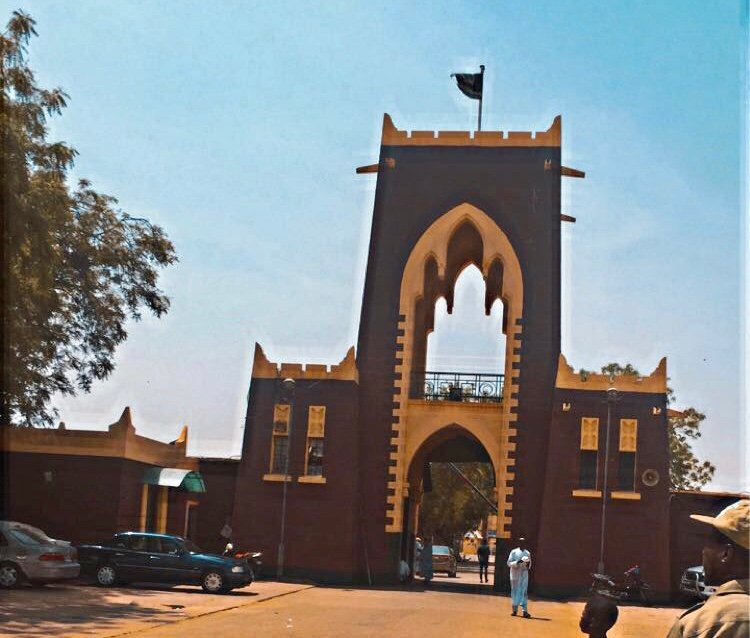
The recent incisive and thought-provoking intervention by Yusuf Musa and Jabir Musa Suleiman of the Centre for Contemporary Studies (CCS), titled “Kano, Wake Up: Markets, Power and the Quiet War Over Nigeria’s Trade Future,” is more than commentary—it is a structural diagnosis of a looming economic eclipse.
For centuries, Kano stood at the heart of Trans-Saharan commerce. Today, as the global economy shifts from physical exchange to digital control of value, the city finds itself in a paradoxical position: working harder than ever, yet owning less of the outcome. The authors’ central thesis is sobering but accurate—sweat no longer translates directly into wealth. In the 21st century, the “Quiet War” is not about who moves the most sacks of grain or processes the finest hides, but about who owns standards, data, platforms, and financial rails.
Kano remains a vibrant engine of production. From the ancient dye pits to sprawling livestock markets, the volume of activity is staggering. Yet much of this effort results in what may be described as busy poverty. Local merchants shoulder physical risks—climate shocks, price volatility, and logistics failures—while real margins are captured in distant financial centres such as Dubai, Geneva, and Singapore.
These hubs have mastered the art of being price makers rather than price takers. They may not grow crops or raise cattle, but they control where contracts are written, where quality is certified, and where payments are cleared. Value now accrues not where goods are produced, but where risks are priced and supply chains are coordinated.
If Kano is to reclaim regional commercial leadership, it must evolve from a Market City into a Trade Power. This demands deliberate investment in what may be termed trade architecture.
Modern global markets—particularly along the emerging Turkey–UAE corridor—do not buy commodities; they buy specifications. Without internationally accredited testing laboratories and phytosanitary certification centres in Kano, producers will remain excluded from premium markets, forced to sell raw volumes at discounts to intermediaries who provide the “seal of trust” and retain the profit.
Equally damaging is the fragmentation of Kano’s markets. Informal trade is invisible to global capital. A functional Commodity Exchange, supported by an Electronic Warehouse Receipt System, would standardise products, improve price discovery, and allow farmers to use stored harvests as collateral—transforming agricultural produce into bankable financial instruments.
Production alone is insufficient; preservation is equally critical. Inadequate cold chains and bonded warehouses expose perishables to massive post-harvest losses, triggering distress sales that depress local prices. High-speed logistics corridors that bypass bureaucratic bottlenecks are essential if Kano’s goods are to reach ports and airports in export-ready condition.
Kano is not short of strategic human capital. Leaders such as His Royal Highness Muhammadu Sanusi II, with deep insight into global financial systems, alongside industrial giants like Aliko Dangote and Abdussamad Rabiu, represent a brain trust most African regions can only envy.
What is needed now is convergence—of expertise, capital, and political will. Not more conferences, but a focused task force charged with designing executable pathways. The questions are practical and urgent: How does Kano become the clearinghouse for West African trade? How do we ensure that when contracts for ginger or hibiscus are signed in Istanbul, financial intermediation takes place through Kano-based institutions?
History teaches that commercial dominance is never permanent; it is a lease that must be constantly renewed through innovation. The Trans-Saharan routes gave way to maritime trade, which is now being reshaped by digital corridors.
Kano’s Quiet War is ultimately a contest for economic sovereignty. Victory will not come from increasing volumes alone, but from controlling value. The choice is stark: organise, or be organised. Kano once led Africa in structuring desert trade. It must now lead again—this time across the digital and financial frontiers of the 21st century.
Engr. Bello Gwarzo Abdullahi, FNSE
bgabdullahi@gmail.com



2 comments