

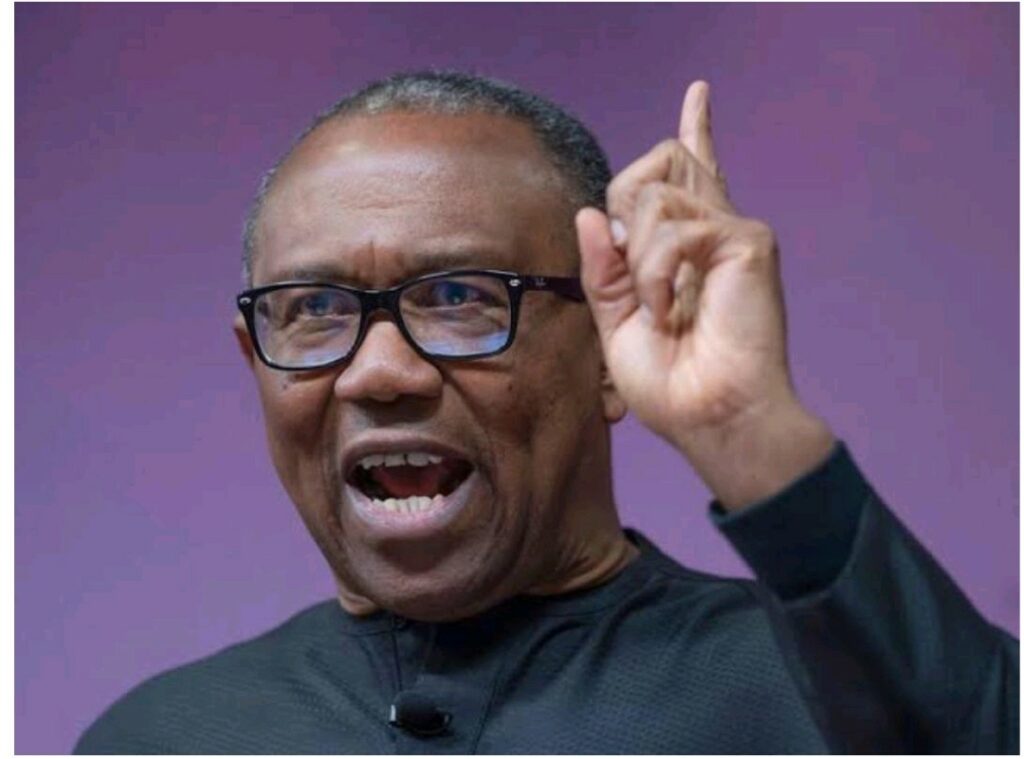
By Charles Ezeaniekwe
As Nigeria moves towards the 2027 general elections, it has become imperative for thoughtful Nigerians to reflect on the journey of the last few years, and the road ahead. In that reflection, one political journey stands out for its consistency, its sincerity, and its sustained focus on the real issues that matter to ordinary Nigerians: the quest of Mr. Peter Obi for a New Nigeria.
This quest did not start in 2023. It started long before many of today’s politicians discovered the word “Obidient.” It is a sustained quest that has been defined by prudence, production, and people.
Nigeria is tired of leaders who promise in the day what they have never done in their lives. Peter Obi is different because his record is public, verifiable, and consistent.
As Governor of Anambra State from 2006 to 2014, Peter Obi inherited a state that was practically written off as ungovernable, with broken infrastructure, unpaid salaries, and a battered image. When he left eight years later, Anambra was debt-free. Not a single kobo was owed to any bank in Nigeria or abroad. Instead, he left over N75 billion in savings and investments, including over $156 million in dollar-denominated bonds, plus investments in companies like SabMiller that yield billions for Anambra State today.
That single act of leaving savings instead of debt is revolutionary in Nigeria’s political culture where most states leave behind mountains of loans and abandoned projects. The Debt Management Office confirmed it. The banks confirmed it. And Anambra people lived it.
Remarkably, Obi’s record in education is unmatched. Anambra moved from 26th position nationally in WAEC and NECO to 1st position under his watch. How? He returned schools to their original missionary owners, provided each secondary school with buses, computers, laboratories, generators, and boreholes, investing over N30 billion directly in schools. He built the Chukwuemeka Odumegwu-Ojukwu University Teaching Hospital in Awka and secured accreditation for several institutions.
Similarly, he built over 800 kilometers of roads spread across the 21 local government areas of the state without regard to whether people in certain areas voted for him or not.
Perhaps the most powerful aspect of Peter Obi’s sustained quest is his clear, consistent economic vision: to move Nigeria from consumption to production.
For over 40 years, Nigeria has run an economy that shares oil money rather than create wealth. Toothpicks, fish, palm oil, and petrol are imported, despite having crude oil, vast arable land, and a youthful population. We subsidise consumption and punish production with multiple taxation, lack of power, and policy inconsistency.
Peter Obi has been warning about this for over a decade now. His message is not new; it has been sustained: cut the cost of governance – he questions why Nigeria should have over 100 official cars in the Presidency while primary schools have no chairs. Other aspects of his message includes: block leakages, support small and medium enterprises with single-digit loans, fix power, so the tailor in Aba, the welder in Kano, and the fashion designer in Lagos can work without spending 70 percent of their profit on diesel; invest in agriculture and turn the North into a food-producing powerhouse for Africa, invest in manufacturing and technology, and empower the youth not with handouts, but with skills and opportunities.
This is not textbook economics. This is what China did to lift 800 million people out of poverty. This is what India, Vietnam, and Bangladesh did. This is what Peter Obi did in Anambra State. As Nigeria faces inflation and unemployment with desperate need for jobs, his sustained quest for a production-based economy becomes more relevant than ever.
In one of his most quoted speeches, Peter Obi said that leadership must be defined by character, competence, and compassion. These three that have been missing in our national leadership are the pillars of his sustained quest.
In terms of competence, Peter Obi understands the numbers. He can tell how many Nigerian children are out of school, how many megawatts we generate, how much we lose to oil theft, and how many containers are stuck at Apapa. He doesn’t need consultants to read statistics. He is a successful businessman, a former chairman of several corporations, and erstwhile adviser to international development agencies. With such a pedigree, he is prepared for the complex job of governing over 250 million people.
In character, Peter Obi’s simplicity is a bold moral statement in an era where politicians flaunt wealth they cannot explain. He flies economy class, carries his own bag, wears one wristwatch for years, and has been investigated multiple times by anti-corruption agencies with nothing found. He has no record of stealing public funds. In a country tired of corruption, character is it.
Peter Obi’s compassion is not staged for television. He visits internally displaced persons’ camps across Nigeria without press convoys. He visits schools and hospitals in remote villages, and secretly donates to orphanages. He believes that a leader must feel the pain of his people. This compassion is why Nigerian youths see a father in him.
Some would ask: Why is Peter Obi running again? The answer is simple: his quest is yet to be realised, as Nigeria’s problems remain unsolved.
The Obidient Movement of 2023 was not a political party phenomenon. It was a loud cry for help by millions of young Nigerians tired of a country that wasn’t working for them. That movement has been sustained because the hunger for a new Nigeria has been sustained, with Nigerian youths crying louder for real change. They still yearn for a country where hard work truly pays, where merit matters, where electricity is not a luxury, and where their passport is respected anywhere in the world.
Peter Obi remains the only political figure in Nigeria who can organically mobilise millions of youths, women, professionals, traders, market women, students, and Nigerians abroad without paying a farthing. His campaign in 2023 was funded by ordinary Nigerians donating from their hearts. That is not politics; that is movement. And movements outlive elections.
The 2027 presidential election is not about North versus South. It is not about APC versus NDC. It is about the old way versus a new way that will work for Nigeria. It is about whether Nigeria will continue to be a nation that borrows to consume and shares to waste, or become a nation that produces to prosper.
Peter Obi’s sustained quest for a new Nigeria is the answer. It is a quest for a Nigeria that is secure, united, productive, and respected. It is a quest for a Nigeria where no child is out of school because his parents are poor; a Nigeria where no youth is jobless because there is no power to start his business; and a Nigeria where no citizen is oppressed because of his tribe or religion.
That Nigeria is still possible. But it requires a leader who has sustained the quest for a new Nigeria of our dream.
Amb. Charles Ezeaniekwe is Deputy Majority Leader of Youth Assembly of Nigeria
