
CHATHAM HOUSE: WHEN EL-RUFAI WAS ANSWERING QUESTIONS FOR TINUBU, RENO WAS OUTSIDE PROTESTING AGAINST HIM

By Zakariyya Ahmad Mai Saje
Sometimes, you don’t need a long political speech.
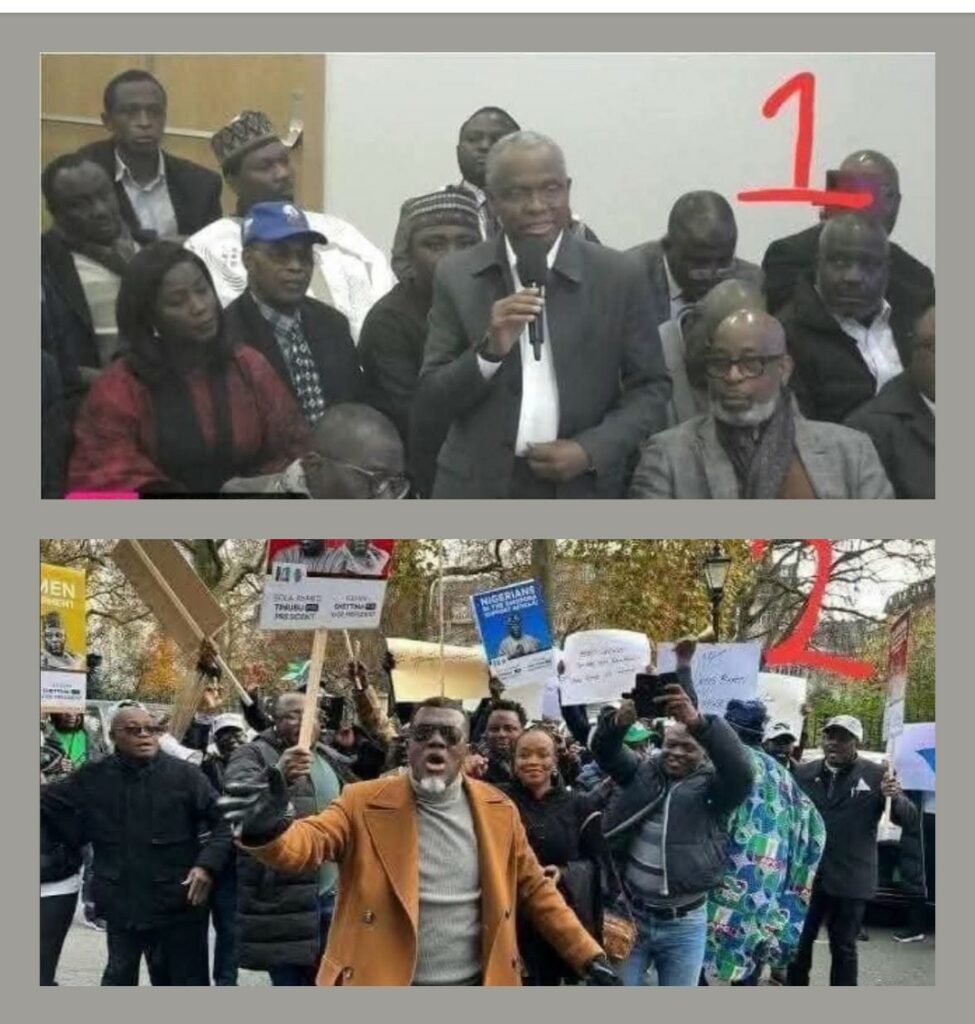
Sometimes, two pictures from the same day tell the story better.
On 5 December 2022, Bola Ahmed Tinubu appeared at Chatham House in London during the 2023 presidential campaign.
When questions were put to him, he delegated some of them to members of his team. Then-Governor Nasir El-Rufai was asked to respond to the question on insecurity, while other questions were handled by members of Tinubu’s team. Tinubu explained that he was demonstrating his philosophy of “team-ship.”
Now look at the other picture.
Reno Omokri was outside Chatham House that same day, leading a protest against Tinubu.
The protest was openly critical of Tinubu, with Reno and others carrying placards and chanting against the APC presidential candidate. Contemporary reports and fact-checks confirm that the protest was against Tinubu—not in support of him.
Just pause for a second and think about that.
Inside the building:
El-Rufai was standing with Tinubu’s team and answering questions on insecurity.
Outside the building:
Reno Omokri was protesting against Tinubu.
Politics can change.
People can change sides.
All of us have the right to change our political positions.
But history has a very interesting way of keeping receipts.
And today, Reno Omokri has been appointed Ambassador-designate to Mexico by President Tinubu.
Meanwhile, Nasir El-Rufai—who stood beside Tinubu at Chatham House and helped defend the team’s position on insecurity—is today at the centre of serious political and legal controversy.
This is not about saying people can never change their minds.
They can.
The question is about consistency.
Because political history is not only about what people say today.
It is also about what they said yesterday, what they stood for, who they defended, and who they opposed.
And for those of us watching all of this unfold, one lesson remains:
Don’t worship politicians. Watch the record.
Don’t just listen to today’s speeches.
Go back.
Check the old videos.
Check the old photographs.
Check the old statements.
Because sometimes, the clearest explanation of today’s politics is hidden in yesterday’s pictures.
And as for Mallam Nasir El-Rufai?
Whatever anyone thinks about him politically, one thing is certain:
Pressure has not erased his name from Nigeria’s political conversation.
You can disagree with him.
You can criticise him.
You can investigate him.
But history will ultimately judge every political actor by the decisions they made when it mattered.
Chatham House was one day.
But the political lessons from that day are still with us.
