’37bn crude, 200tn gas reserves can mutate Nigeria’s economy’

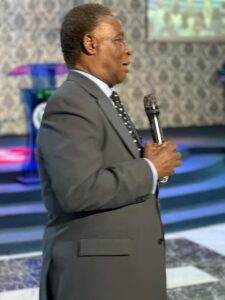
The permanent Secretary of Federal Ministry of Petroleum Resources, Dr. Emeka Obi has expressed strong optimism that the nation’s 37 billion barrels of crude oil reserves and over 200 trillion cubic feet of natural gas, have the capacity to transform the economy.
The Permanent Secretary made the disclosure on Tuesday in Abuja during the 8th Valuechain Annual Lecture Series, themed “Growth in the Energy, Oil and Gas Sector: The Nexus between Economic Development, Social Impact and Public Perception.”
The theme, he said, is not only timely; but urgent, strategic, and fundamental to our national journey.
According to him, “Energy is not just a commodity. It is the lifeblood of industrialization, the backbone of economic productivity, the driver of jobs, and a critical lever for social stability and national security.
“Yet, in Nigeria, the energy conversation has often been defined more by controversy than by clarity, more by perception than by data, and more by distrust than by partnership. The task before us today is to reshape not only the architecture of the energy sector but also the public narrative surrounding it.
“No nation has achieved sustainable prosperity without first resolving its energy question. From manufacturing to agriculture, from transportation to digital infrastructure, every sector of the modern economy depends on reliable, affordable, and accessible energy. It is therefore no coincidence that countries with stable energy systems also have stronger currencies, lower unemployment, and more inclusive economic opportunities.
“Nigeria holds over 37 billion barrels of crude oil reserves and over 200 trillion cubic feet of natural gas, one of the largest in Africa. When properly harnessed, these resources should be a foundation for national transformation rather than a source of conflict and disappointment.
“That is why the enactment of the Petroleum Industry Act (PIA) 2021 remains one of the most consequential reforms in Nigeria’s modern history. It was not merely a legal reform; it was an economic reset, designed to: Improve transparency, Strengthen governance,
De-risk investments, and reposition the sector for long-term growth,” said Obi.
In his welcome address, the Publisher/CEO of the Valuechain Media Group, Musa Usman, said that African needs paradigm shift from exporting crude oil and importing refined products which is associated with poverty to becoming a global powerhouse, led by Nigeria.
According to Usman, the transformation is key to creating jobs, retaining values, and transforming local economies.
“For far too long, Africa has exported crude and imported poverty. Today’s conversation challenges us to consider a paradigm shift, one where Africa, led by Nigeria, becomes a global refining powerhouse capable of creating jobs, retaining value, and transforming local economies. We remain confident that our keynote speakers, distinguished panelists, and moderators assembled today will deliver deep insight, provoke reflection, and inspire meaningful actions,” he said.
In his remarks, the Minister of Information and National Orientation, Mohammed Idris, said the theme which emphasises the tripartite relationship among energy, economic development, and public perception, aligns with the philosophy of President Bola Ahmed Tinubu’s administration, which balances economic reforms, social outcomes, and public trust.
The Minister, represented by the Director-General of Federal Radio Corporation of Nigeria (FRCN), Dr. Mohammed Bulama, maintained while the energy sector is central to Nigeria’s economic revival, the Tinubu’s administration prioritizes a stable, modern, and efficient energy sector as vital for sustainable growth, investment attraction, and job creation.
He highlighted vital reforms such as National Gas Expansion and Affordability, Power Sector Transformation, Deepening Investment Confidence and Local Content that are already reshaping our national trajectory.
He therefore stressed that reforms succeed only when citizens understand them and trust the intention behind them. “Public perception is therefore not an afterthought; it is an integral part of nation-building,” he added.
The Minister assured that the ministry is working to ensure that Nigerians can clearly see what the government is doing, why certain decisions are necessary, and how these reforms translate into long-term benefits. This efforts, he said, include countering misinformation and promoting transparency to explain the benefits of the Tinubu administration’s initiatives.
COURTESY: newnationalstar


Post Comment